Dubai /PRNewswire/ — Boeing (NYSE: BA)
forecasts that airlines in the Middle East will need an estimated 2,520
airplanes worth $450 billion by 2030. The forecast comes as the region’s
carriers continue to surpass global air traffic and capacity growth rates.
Boeing estimates that the Middle East’s fleet of passenger airplanes will
grow from a current fleet of 1,040 airplanes to a projected 2,710 airplanes, an
increase of 160 percent. 34 percent of the projected demand will be for
airplanes to replace current aircraft, while 66 percent will be part of fleet
expansion plans as the region’s airlines gear up for significant growth over
the next two decades.
"The Middle East has seen an unprecedented growth in capacity over the
past 10 years and every indication points to a further, significantly large
increase over the next 20 years," said Boeing Commercial Airplanes Vice
President of Marketing Randy
Tinseth, who presented Boeing’s Current Market Outlook at the
2011 Dubai Air Show. "The region’s airlines with their forward thinking
approach have become a competitive force globally."
Single- and twin-aisle airplanes will account for 90 percent of the Middle
East’s new airplane deliveries over the 20-year period, according to the Boeing
forecast. An estimated 1,160 single-aisle jets, such as the Boeing 737 MAX, and 1,110
twin-aisle airplanes, such as the Boeing 777 and 787 Dreamliner, are
expected to be delivered to the region during this time. The remaining ten
percent is split between large airplanes such as the Boeing 747-8
Intercontinental and will account for 7 percent of projected demand, with
an estimated 180 airplanes to be delivered to airlines in the Middle East.
Regional jets will account for the remaining 3 percent.
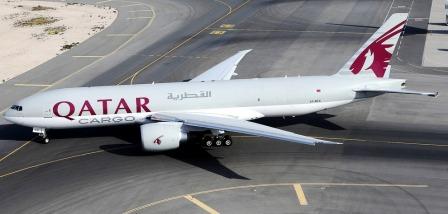
"The collective capacity of three airlines, Emirates Airline, Etihad
Airways and Qatar Airways has grown by an average of 23 percent annually over
the past decade and we expect this trend to continue well into the future. All
three airlines base their growth strategies on the principle that newer, more
efficient airplanes will provide a competitive advantage over their rivals from
Europe and Asia," Tinseth said. "This visionary approach of investing
in the future has allowed the region’s airlines to stay ahead of the competition."
"With a range of airplanes that fulfill the region’s requirement for
capacity expansion and improved operating efficiencies, Boeing is well
positioned to meet the region’s needs," he added.
As of September 14, 2011, Boeing had a backlog of 300
airplanes in the Middle East. Customers in the region count for a large share
of Boeing’s twin-aisle backlog, accounting for 26 percent of 777s and 15
percent of 787s on order. Boeing currently has a total of 47 customers in
the region that operate an estimated 1,200 flights per day on
425 Boeing airplanes.